

Dispatch from a Baylor Summer Fellow | Stella Wiegert
Looking at my computer screen in confusion and annoyance, I came to one of three conclusions: I was either an idiot, my samples were garbage, or I had accidentally discovered that the largest bacterial database on Earth knew absolutely nothing about shark poop. As any good scientist would, I started by assuming I was the problem.
The shark and ray microbiome samples that I had been analyzing for most of the summer, which had basically become my children, were not producing the bacterial classifications I expected. I opened the analysis expecting hundreds of hits across different bacterial species. Instead, I found one.
One. A single sample out of my 24 that the database could find anything known in. My annoyance and disappointment were evident when I discussed these results with my PI and called my parents to vent later that day. There were three possible explanations: my software was broken, my samples were garbage, or the largest catalog of bacterial life on Earth simply did not contain the organisms in my samples. That night, while ruminating on this result, I read a chapter in Katalin Karikó's autobiography where she was also struggling with her samples. Her response was simple: "just one more thing." Try just one more thing to explain the result. I came into the lab the next day with renewed energy to try just one more thing.
I ran my bacterial control through the pipeline, yielding hundreds of hits for the expected species. So it wasn't the pipeline. I knew there was something in the shark and ray poop that wasn't their own DNA, so I assembled the genomes of whatever was hiding in their feces. And behold, there emerged five glorious, high-quality bacterial genomes from my samples. Three of my samples even produced genomes that could be classified. I beamed at them like a proud mother. At first, I thought I had solved my problem. But the more I looked at those results, the more I realized they pointed to a much bigger one.
The absences in the bacterial database weren't absences in nature, but absences in attention and funding. The GTDB database is enormous, but it is largely built from human gut samples, clinical isolates, and laboratory model organisms. My bacteria were missing not because they were unimportant, but because no one had invested in exploring their fascinating gut microbial physiology. The long-read sequencing technology I used had transformed human gut research but had never been applied to sharks.
This experience taught me far more than how to troubleshoot bioinformatics pipelines. I continually encountered the same challenge: a lack of resources, reference material, and research on these ecologically vital creatures. Rather than discouraging me, these challenges gave me purpose. They showed me that scientific progress comes not only from refining what we already know, but also from asking questions about overlooked organisms and ecosystems.
Now that I have my adorable little bacterial genomes, I can continue investigating the microbial communities of sharks and rays, bringing us one step closer to understanding their fascinating gut microbiome composition. As I move beyond this internship, I hope to carry the perseverance and curiosity I developed this summer into a career exploring neglected microbial communities. I want to help create a microbiome research atmosphere where all bacteria are welcome and explored, because these discoveries can transform our understanding of ecosystems, animal health, and human health.
More than anything, this summer taught me that worldwide leadership and service in science is not always about having the right answer the first time.
Sometimes it is about looking where others have not, embracing uncertainty, and trying just one more thing (and occasionally discovering that the world’s largest bacterial database really does not know much about shark poop).
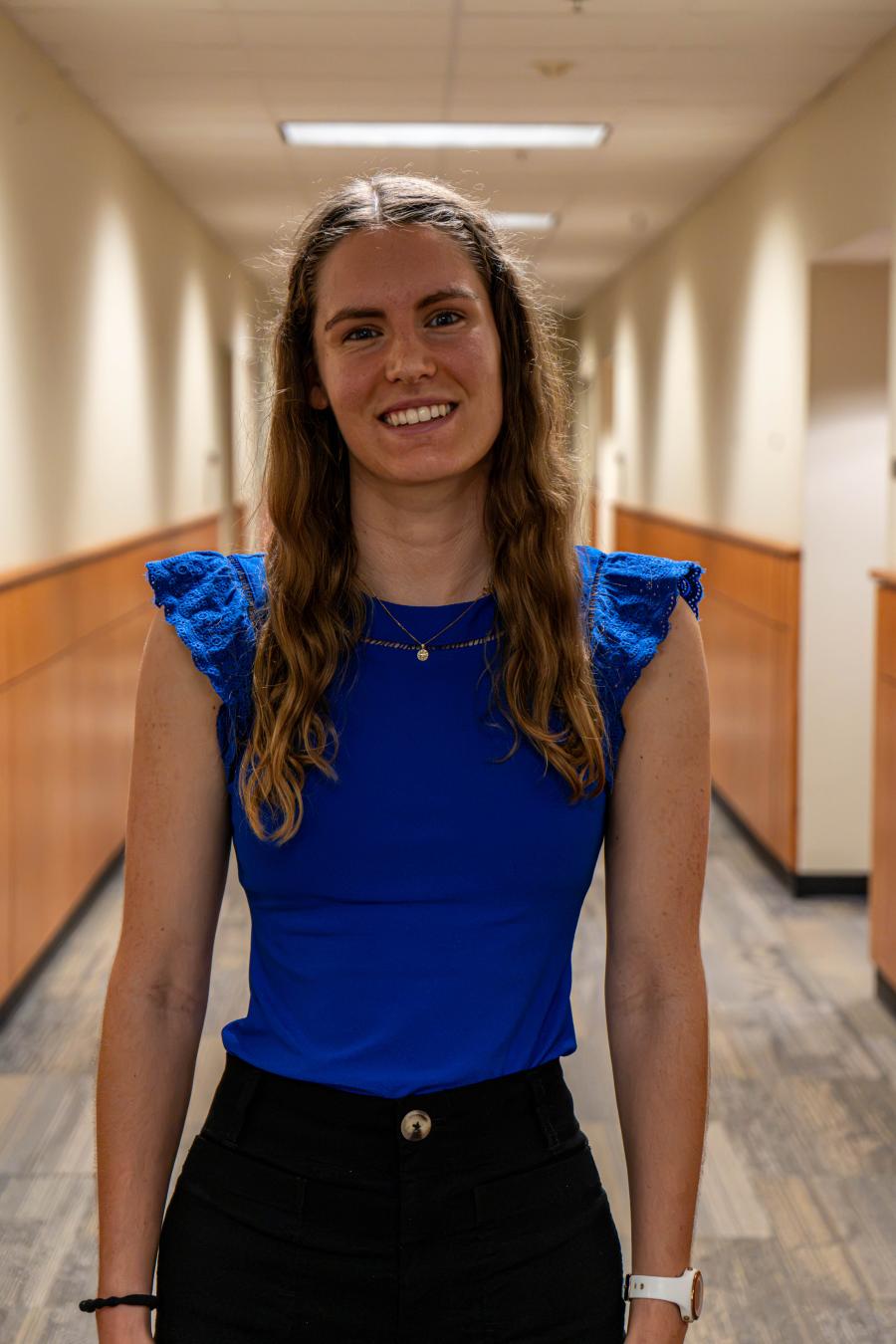
(Stella Wiegert, Senior Biochemistry Major, Data Science Minor)