

Dispatch from a Baylor Summer Fellow | Alexa Moldenhauer
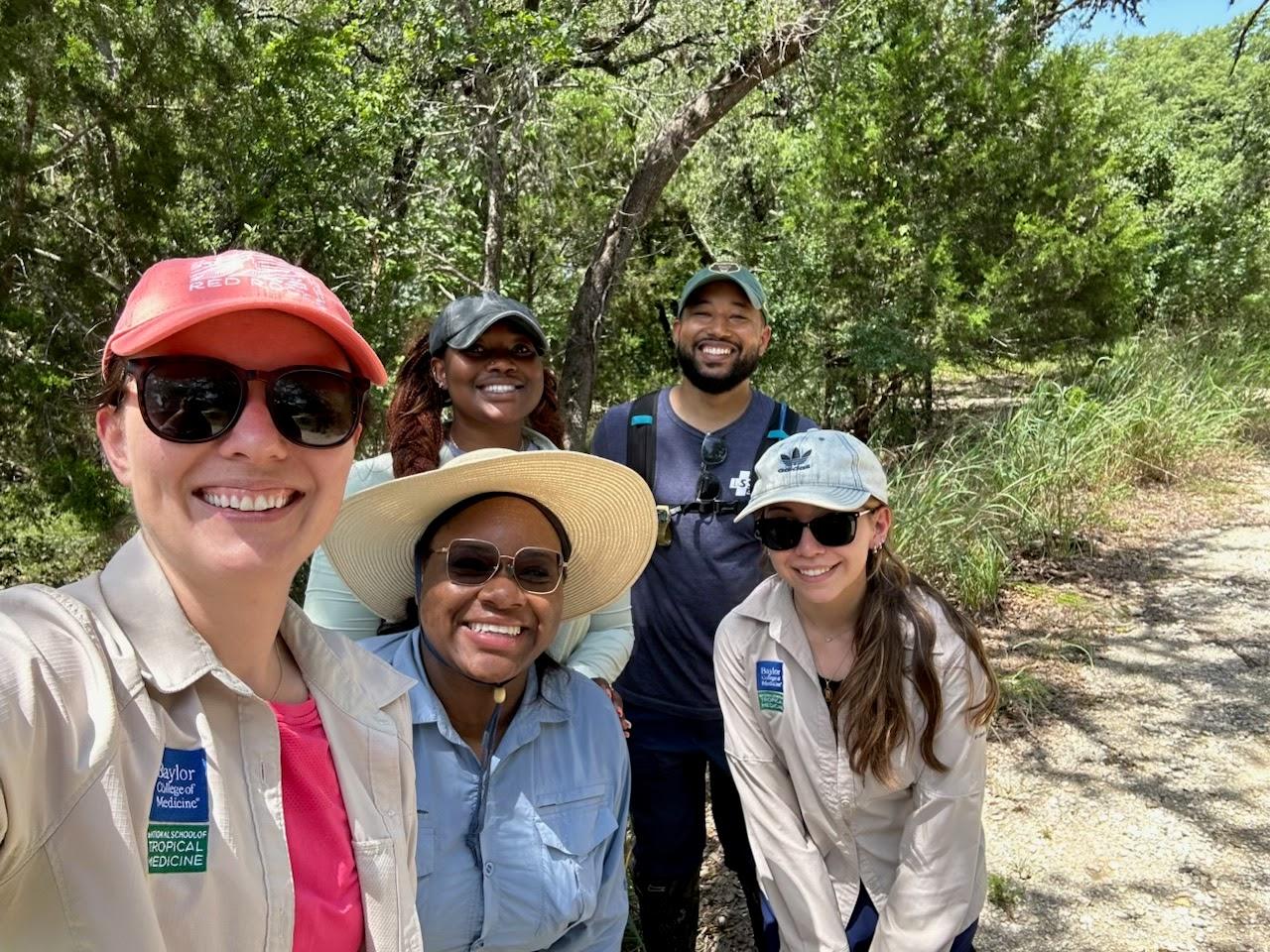
From left to right: Dr. Sarah Gunter (Ph.D., MPH), Fernique Pinder (MPH), Maya Murry (graduate student), Fred Pinder (MS2 at McGovern Medical School & Baylor Alum!), and Alexa Moldenhauer
Learning emphasize: deep, purposeful engagement, experiential learning, and the pursuit of knowledge for the betterment of our shared world. Through my work with the Texas Tick Project, I experienced how even technical research can be rooted in the community. The ticks I worked with did not just serve as a source of data; rather, they came from individuals concerned about their own health and family.
The citizen science approach gave me a firsthand look at participatory research methods, once again reminding me of the CBGL toolkit lessons emphasizing the connection of health across the globe and the need for approaching research and community initiatives with people rather than for them.
Indigenous scholar Eve Tuck’s question, “What can research really do to improve this situation?” remained a guiding compass for me. I continually returned to the idea that the data obtained alone is pretty insufficient unless it is used to serve those most affected by health inequalities. Many tick-borne illnesses are misdiagnosed or underdiagnosed in rural, low-income areas. By mapping vector distribution in countries like Belize and identifying potentially pathogenic species within these ticks found there, our work aimed to inform clinical decision-making and ultimately improve patient outcomes in vulnerable populations.
The TDRIP internship also challenged me to think critically about my own privilege and role as a student researcher in the global health field. I am keenly aware that I have access to resources and mentorship through Baylor that many others do not. Understanding my fortune helped me approach my work with greater care and humility. It reinforced the importance of approaching the idea and execution of global health work not from a place of aid, but rather a position of mutual respect and shared humanity. As someone who aspires to be in a career of medicine, this experience helped further my understanding of what leadership and service genuinely mean: not directing others, but learning from them. Not offering external solutions, but co-creating them from within.
The pursuit of scientific discovery becomes all the more beautiful when its outcomes extend far beyond the lab and touch the lives of people in our global community.