

Dispatch from a Baylor Summer Fellow | Sahil Adtani
On a calm but chilly day, in the wake of the new year, a delicate layer of ice coats Lake Akan in Hokkaido, Japan. The ice, appearing sentient, takes many forms before settling as a beautiful and fragile flower -- prone to fall apart at the slightest touch. It's a phenomenon that takes place in Hokkaido, and only in Hokkaido, in the most perfect conditions: an intersection of bitter cold, volcanic activity, and steaming hot springs. The flowers are confined to growing only here in this seemingly unreal crossroads of two extremes. There's something captivating about having something so miraculous, hidden, locked away in one place.
How convenient would it be to have all the world’s problems also be trapped in one place, a place to always be avoided?
Unfortunately, health problems defy such wishful thinking. Unlike the flowers, these problems persist in the harshest conditions and don't respect the arbitrary lines we set on the map. They're a global phenomenon, and thus, to treat them, we must adopt a global perspective. Global Health is a field that prioritizes the people; it promotes concepts such as health equity for all, and its limitations are honestly nonexistent. It’s in the name GLOBAL health; the entire global population is considered one community, regardless of where they are and what they have. Location, economy, and social status are considered only in the sense that they could be factors that caused or exacerbated the condition, but they aren’t discriminatory factors. Stronger, better-off countries in the pursuit of global health would focus on helping the countries that may be less developed or suffering because it’s the right thing to do to better the health of the world. They would help as partners, not as shallow benefactors.
As an example, we can dissect tuberculosis. In the United States, that disease is like an artifact at this point, with fewer than 10,000 cases annually and fewer than 600 deaths. When looking at this from a global standpoint, there are around 11 million cases and 1.5 million deaths worldwide. It’s not a problem where we are, but it is a problem for others, which is compelling enough, nonetheless. The pursuit is selfless and requires cultural humility, impartiality, and perseverance.
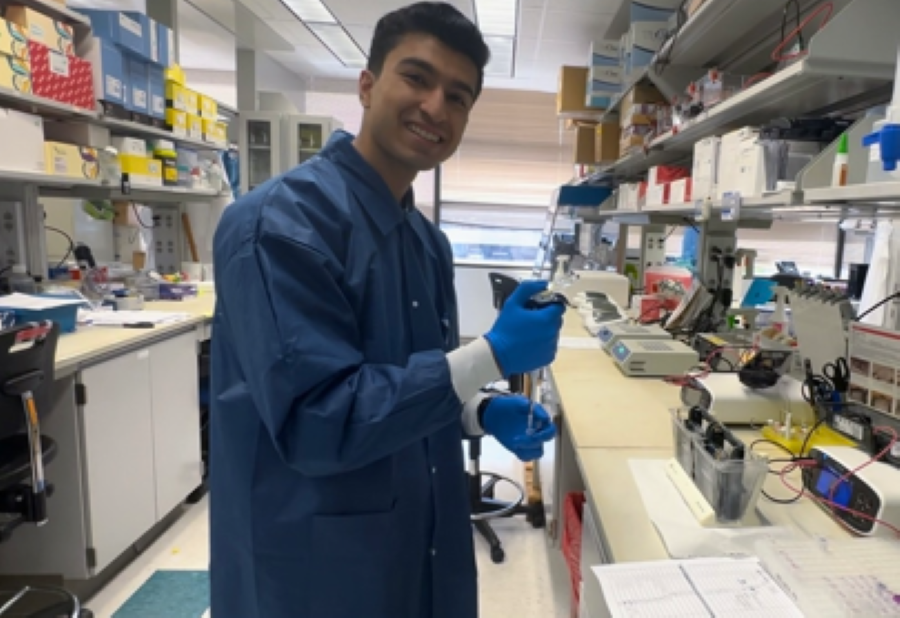
While working at the Baylor College of Medicine’s National School of Tropical Medicine, I grasped just how intricate the initiative is. When working in the lab, we have an understanding that our job is only half the puzzle. There are people in the field, in those countries, with experience fighting these diseases long before we decided to dissect them from the safety of our laboratory. Many of those that I’ve worked with are desensitized to failure, working tirelessly, albeit optimistically, towards a solution that takes years to manifest, let alone perfect. Furthermore, this initiative is multifaceted; if we get as far as finding a solution, then we must make it cost-effective, easily reproducible, and time-conserving for the manufacturer in that country’s infrastructure, which takes another few years. Despite the constant roadblocks, the uncertainty of reaching the end goal, and the weight of the losses that accumulate while we work, we keep working. We do it because we feel a moral obligation to do so.
Lastly, I feel it is important to address the negative side of global health and the risks of imbalance in partnerships. The countries that are helping should not hold a chip over the countries they’ve helped. There should be a balance, and both sides should be viewed equally, not one as dominating and generous while the other as weak and indebted. The partnerships created to solve these problems shouldn’t turn into dependency either. This is something we work towards every day, not only when the fire is reaching close to home. The past has taught us: a health concern or disease shouldn’t have to cross borders and become a pandemic for us to finally concern ourselves with it.