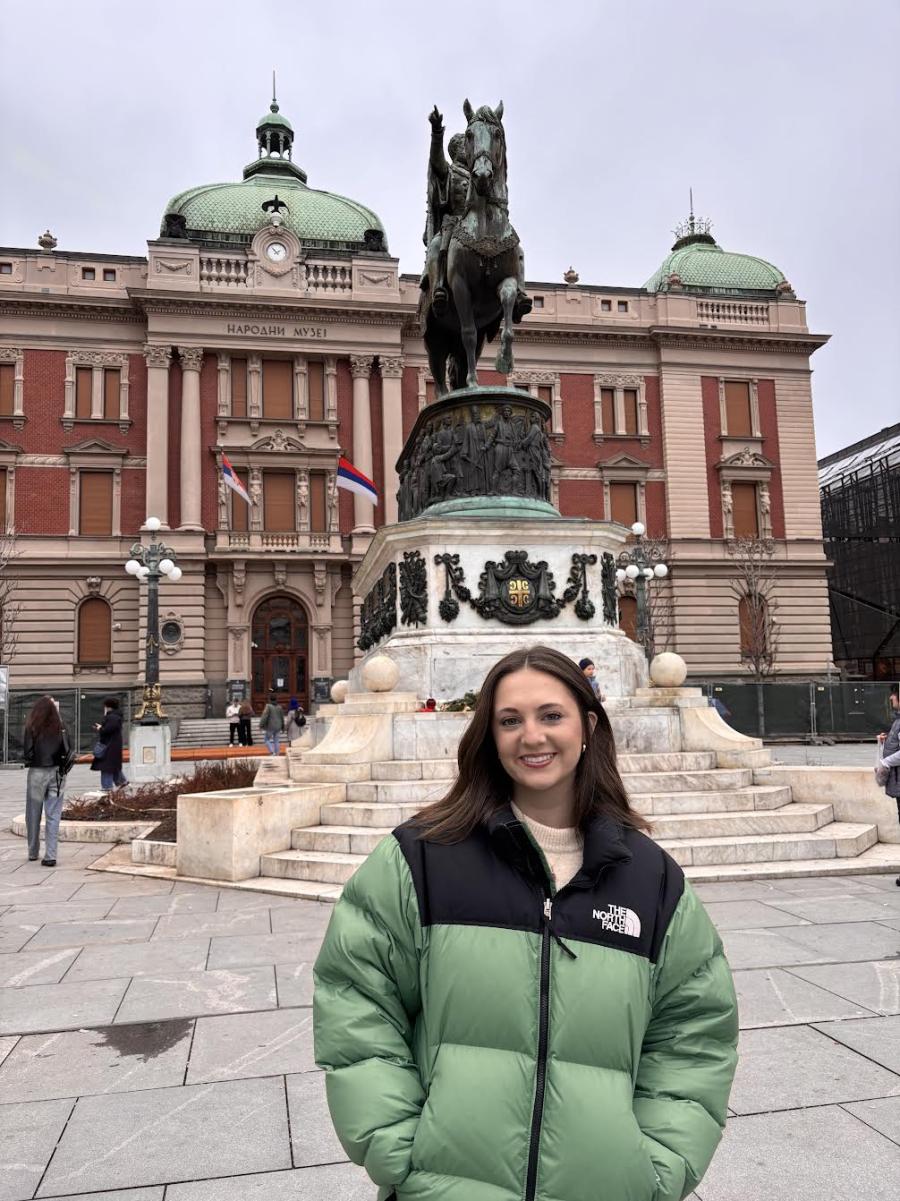
Fulbright Dispatch From Serbia
Emily O'Kief (B.A. '24, University Scholars major and French minor) shares her experience on a Fulbright English Teaching Assistant award to Serbia from 2024-2025.
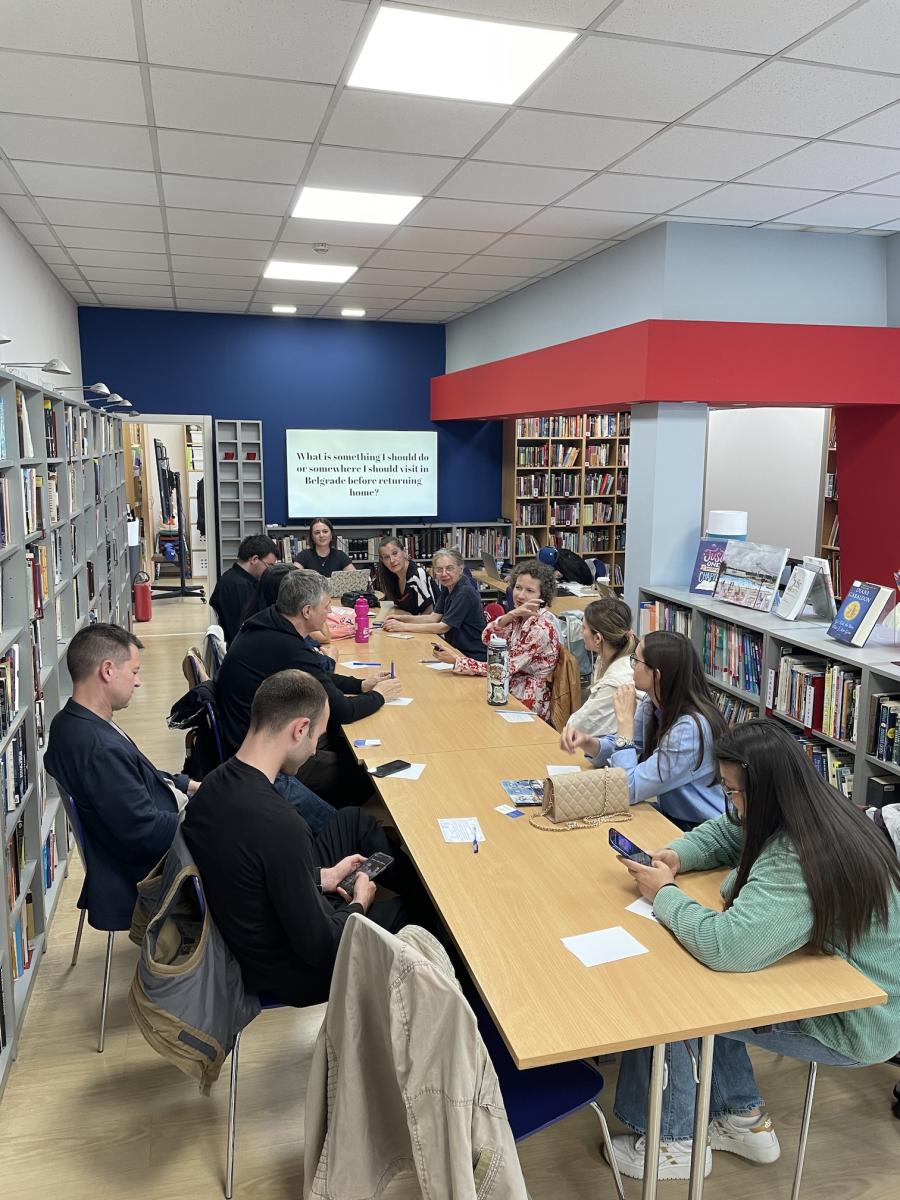
If I could go back in time and give two pieces of advice to my pre-Fulbright self, I would tell myself to pack less and to expect the unexpected. I landed in Belgrade, Serbia on September 18th, eager to begin co-teaching English at the University of Belgrade. The first few weeks were a whirlwind of orienting myself locally, finding an apartment, getting used to the Cyrillic alphabet on every street sign, and, most importantly, getting to know my students. Beginning in October, four times a week, I met with first-year, third-year, and fourth-year university-level students interested in becoming English teachers.
During class time, we reviewed advanced grammar, discussed the psychology of language learning at different age levels, and theorized about the most effective teaching methodologies used to teach English to young learners. In between classes, my students recommended local restaurants, cinemas, and кафанас (bistros/cafés). We discussed our favorite musical artists, and they listed all the major American artists who had visited Belgrade on tour. I learned about their villages, favorite travel destinations, and holiday traditions. However, just as I was beginning to build deep connections with my students, all university instruction came to a halt, and my teaching responsibilities were put on hold.
Beginning in early December, protests erupted across the country, and I was notified that my faculty would be closed indefinitely. The protests were initially sparked due to the collapse of a train station canopy in Novi Sad (Serbia’s second-largest city), which ultimately led to the death of 16 Serbian citizens. However, the protests quickly gained momentum as peaceful protesters were met with violent pushback. Soon, protesters organized and generated a list of demands they requested their government fulfill, including the publication of the plans outlining the recent remodeling of the Novi Sad train station, the release of peaceful protesters who had been arrested, and the arrest of those suspected of having physically attacked student protesters. Protests have been held weekly across the country since early November, and on March 15th, the largest gathering ever recorded in Serbian history took place in Belgrade with hundreds of thousands of attendees (although some sources speculate that over a million attended) from all over the country.
Although it’s often easy to be discouraged about the fact that the Fulbright experience I anticipated pre-departure has not been a reality, I truly believe that, due to the current political situation in Serbia, I’ve come to know the Serbian people and their country in a way that would have been impossible otherwise. In witnessing firsthand the way people across the country have come together to fight governmental corruption and urge their leaders to better protect and invest in their constituents, I’ve learned about the resiliency and values of those around me. Rather than discussing the complexities of English verb tenses, my days are now filled with conversations with locals about the future of their country, which, oftentimes, allows me to learn about their memories of the past. Serbia, being previously part of Yugoslavia and having relatively recently been engulfed in war, is rich with history. Through hearing about theories for the future and stories of the past, I have come to know this region much more thoroughly than I would have been able to by simply reading a history book.
Additionally, now that classes are no longer in session, I have had more opportunities to travel around Serbia. I’ve visited mountains in the South and caves in the East. I’ve examined the architectural influence and experienced the cultural impact of three empires that once claimed parts of Serbia as their own (the Romans, Austro-Hungarians, and Ottomans). In journeying around Serbia, I’ve come to realize that although in dozens of ways, Serbia is completely different from the plains of Nebraska that I call home, in other ways, it’s shockingly similar. The rural areas surrounding Belgrade almost perfectly resemble the flat, green grasslands of the Midwest. Additionally, sarma, a popular Serbian dish, boasts an ingredient list almost identical to a “runza,” a Nebraska favorite, both of which require creating a bun-like form with cabbage and ground beef.
As my Fulbright year approaches its end, I am desperately trying to figure out how I’m going to fit everything in my suitcase, and I’ve also come to understand the value of the unexpected. I’m incredibly grateful to have been able to experience life in Serbia during such an unprecedented time. The Serbian people continue to inspire me daily with their solidarity and commitment to their country. Through relinquishing my need to know what the future holds, I’ve learned valuable lessons about the importance of approaching life one day at a time, all while enjoying unfamiliar cuisine, experiencing new traditions, and building bonds that transcend borders.