

Get To Know the OEL | Dr. Dwayne Simmons
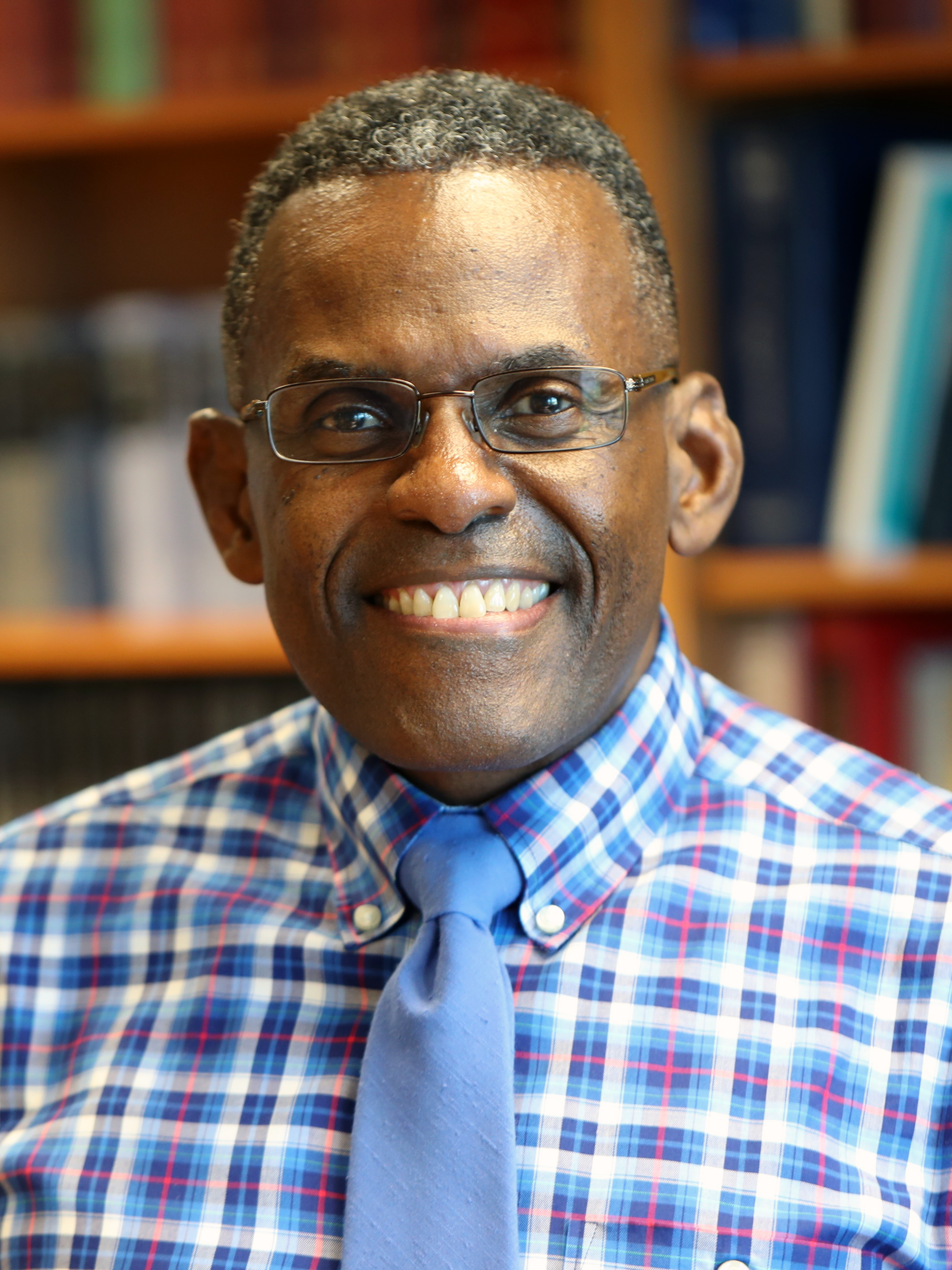
Dr. Dwayne Simmons, the Cornelia Marschall Smith Endowed Professor in the Department of Biology, serves as Senior Director of STEM Initiatives in the Office of Engaged Learning. In addition to his fascinating research and accomplished teaching, Dr. Simmons also thinks deeply about his faith, his advocacy and service, and his global impact.
This conversation with Dr. Andy Hogue, Associate Dean for Engaged Learning, is the first installment in a new series we call "Get To Know the OEL."
AH: Who is Dwayne Simmons? Where did you come from, and how did you make your way here?
DS: I came to Baylor from UCLA via the University of Sheffield. I had been a faculty member at UCLA for 17 years where I directed two NIH-funded and one state-funded undergraduate research programs. The year prior to coming to Baylor, I had been awarded a mid-career NIH research training grant as well as an US-UK Fulbright Scholar Research Award to work for one-year at the University of Sheffield. I decided to take Baylor’s offer to chair the department of Biology while my family and I were living in the UK.
AH: Describe for us, in layperson’s terms, your research.
DS: My research focuses on the cellular and molecular mechanisms of aging and development in the sensory systems of the inner ear as well as in the brain. Specifically, we study the molecular mechanisms leading to hearing loss or vestibular dysfunction in sensory cells, neurons, and immune cells in the inner ear and brain. We currently hypothesize that cellular aging, also known as senescence, makes sensory cells in the inner ear as well as neurons in the brain more susceptible to injury, which not only leads to for example hearing loss, but may also lead to disruption of networks associated with memory loss.
AH: Why do you do that research? How do you think about the value it adds to the world?
DS: I have been blessed with an innate curiosity about God’s creation and how it functions and evolves. In particular, I love thinking about the brain and trying to understand its underlying biology well enough to contribute to the discovery of interventions that can delay or deter pathology and disease. So for me, it is not only about discovering new knowledge (although this is important), but contributing to mechanisms of healing when things do not work.
AH: What’s your role in the OEL? What are you spending your time on these days, and how does that matter for Baylor students?
DS: I am relatively new to OEL. I serve as the director of the STEM initiatives. One of my passions is student research and mentorship. I have been creating research programs for undergraduate students most of my professional career. I deeply believe that the best way to learn science is through the practice of science through research. I also believe that undergraduate research is the best way for students not only to understand science, but also to enjoy science. In so many ways, God has gifted every child with this curiosity about the world around them. Doing research can be one way in which we spark the natural curiosity built into us. So what am I doing in this regard? I direct the B-TRUE (Baylor Transdisciplinary Research Undergraduate Experience) summer program. This undergraduate program helps students conduct research with specific faculty and helps them think about research in other disciplines as well. I also oversee a new Baylor science outreach initiative, Baylor CityLab, which will bring 9th and 10th grade high school students to Baylor for a one-day science extravaganza and where our undergraduate students will mentor these high school students. I also work with undergraduate and graduate student organizations such as BURST and SACNAS to help foster research and mentorship.
AH: If we do this Q&A again in a year, what will we be celebrating?
DS: I hope that we will be celebrating a second or third execution of CityLab, successful implementation of research abroad programs for undergraduate students and establishing corporate research internships at Biotech and Pharmaceutical companies for our graduate students.
AH: One of the things I appreciate most about you, Dwayne, is your steady conscience and your clarity of thinking. What is something that has become clearer to you as you have progressed through life?
DS: I would say that I have learned it is critically important that we pursue passions and seek to serve others as opportunities arise. A large part of serving others is teaching either overtly or covertly how Christ can be and should be a part of everything we do, whether at a homeless shelter or research lab bench. We need to look for God in the people we meet and the activities we do.
AH: Tell us about the Dwayne Simmons outside of Baylor, and take that any direction. Also, you have a really sharp wit that is one of my favorite qualities about you. Where does that come from?
DS: I have a passion for helping organizations that serve those who are underserved in our society. In that regard, I currently serve on the Board of Directors at Mission Waco Mission World. I also love biblical study and regularly teach adult classes and occasionally preach at the church my wife and I attend. I just finished teaching a short series on how our brains are wired for faith. Additionally, I enjoy serving others through leadership opportunities and so I serve as a shepherd/elder. Finally, I am a travel enthusiast and enjoy opportunities to travel around the country and around the world.